Most people believe and act as if difficulty is always and in all conditions bad. They do their best to avoid it and complain the second they experience it. This is all natural though, survival instincts make us seek comfort. But what I suggest and will expand upon is that difficulty is good and we need to consciously chose to face it and deal with it.
Difficult moments happen often, especially if you are working on a specific task or project. Before anything, if you acknowledge that the path ahead is unlikely to be smooth and without difficulty, you are taking out the unrealistic and subconscious expectation that things aren’t supposed to go wrong. This is particularly important for people, who like me, plan and prepare quite a bit before starting, hoping to reduces risks of failure and increases chances or success.

Once you start and difficulties come up either from yourself or from the task, your approach should be that of a manager and engineer. You must ask yourself “how can I solve this problem efficiently?” Why efficiently? Because putting all your resources into this single step, if unnecessary, could delay the whole project, lead to burnout or even deplete all your motivation for the later stages. Therefore, a manager would think, to best manage this situation, they need to clearly know what the problem is, why it is a problem and why it has happened.
With the answer to those questions, you now have data points, elements that go into a potential solution you can try. Your solution could also range from what most people do to what you want to do, in your own way, to solve the problem. The ultimate solution could be delegation, optimization of your methods or maybe you need to acquire a new skill.
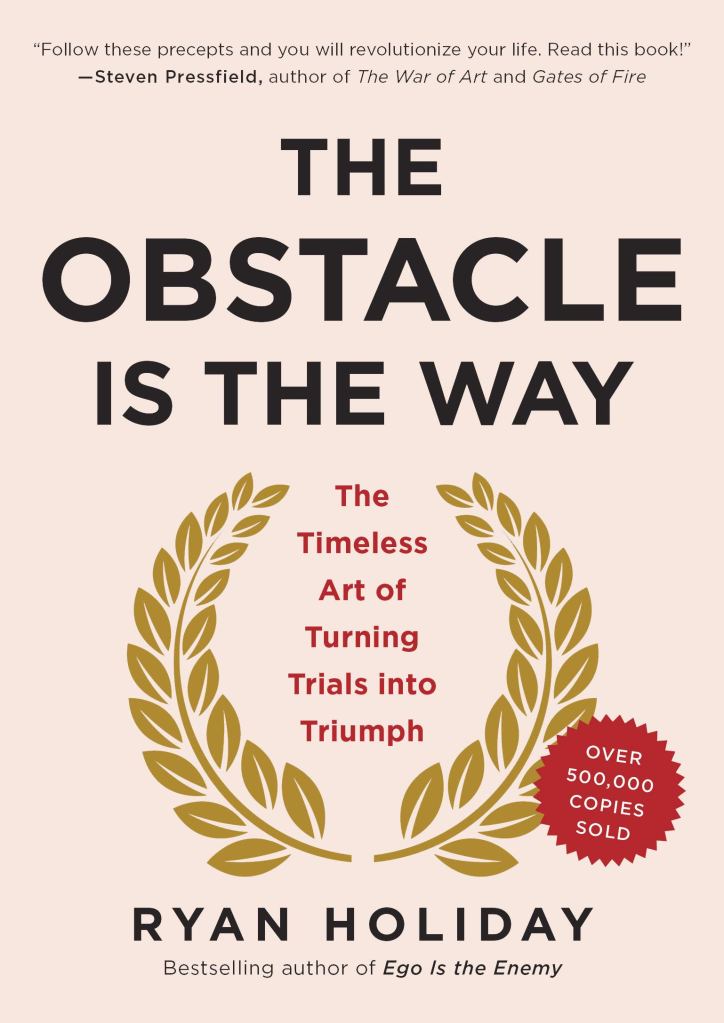
What’s crucial to notice is that when the source of difficulty is from the task or project, the solution might take time and a lot of trial and error and as Ryan Holiday explains in “The Obstacle is The Way” might even be the insight you need to align approaches and improve your systems.
However, when the difficulty is from yourself, it could either be technical, which is often solved by learning new skills or getting new information, or it could be mental; the limits of your capacities. This could be your patience, for a task or for someone, your capacity to forgive, often someone but sometimes yourself, or simply your capacity to focus deeply. All these tell you something! If you judge yourself based on them, you would end up blaming and then rationalizing why you’re not an issue for example. But all that would be a waste.
You have valuable information about yourself, key data points. You now know where your limits are and can push them back to expand your capacities. If its focus, you now have a reason to examine your habits of sleep or work ethic and find what is holding you back. If its patience, you can look within and learn why you can’t be even more patient and learn that it’s because you have set the limit and can push it back also. Of course, sometimes indefinite patience is not the solution and you need to manage otherwise and keep momentum and move forward in other ways, but a lot of times you’re in a rush based on the perception you have of how fast things should be. This relates to your ego and wanting to ultimately be liked by others.
“Every difficulty in life presents us with an opportunity to turn inward and to invoke our own inner resources […] Prudent people look beyond the incident itself and seek to form the habit of putting it to good use […] Dig deeply. You possess strengths you might not realize you have. Find the right one. Use it.”
Epictetus
All this to say that a difficult moment could lead to a positive or a negative struggle. If you keep your goal in mind, and your aim pure and not egotistical, you will realize that a positive struggle leads to you growth and a betterment of your methods of work to reach your goal. Keep it all about the work, not about yourself and you’ll produce quality work without your ego interfering with it.
 Orange Stoic